
6 min read
What the Iowa Manufacturing 4.0 Grant Will and Will Not Fund for Cybersecurity
THE ELIGIBLE TECHNOLOGY LIST SAYS "CYBERSECURITY SOFTWARE." MOST OF WHAT YOU WOULD ACTUALLY BUY IS SOLD BY SUBSCRIPTION, AND SUBSCRIPTIONS DO NOT...
6 min read
START WITH THE PROBLEM, NOT THE TECHNOLOGY.
The CIRAS request form is open in a browser tab. Name, company, county, NAICS code, all filled in. Then the cursor stops at a required field: What technology are you considering investing in? The plant manager knows exactly what’s wrong on line two. He just doesn’t know whether the answer is sensors, software, or something else, so the tab stays open for another week.
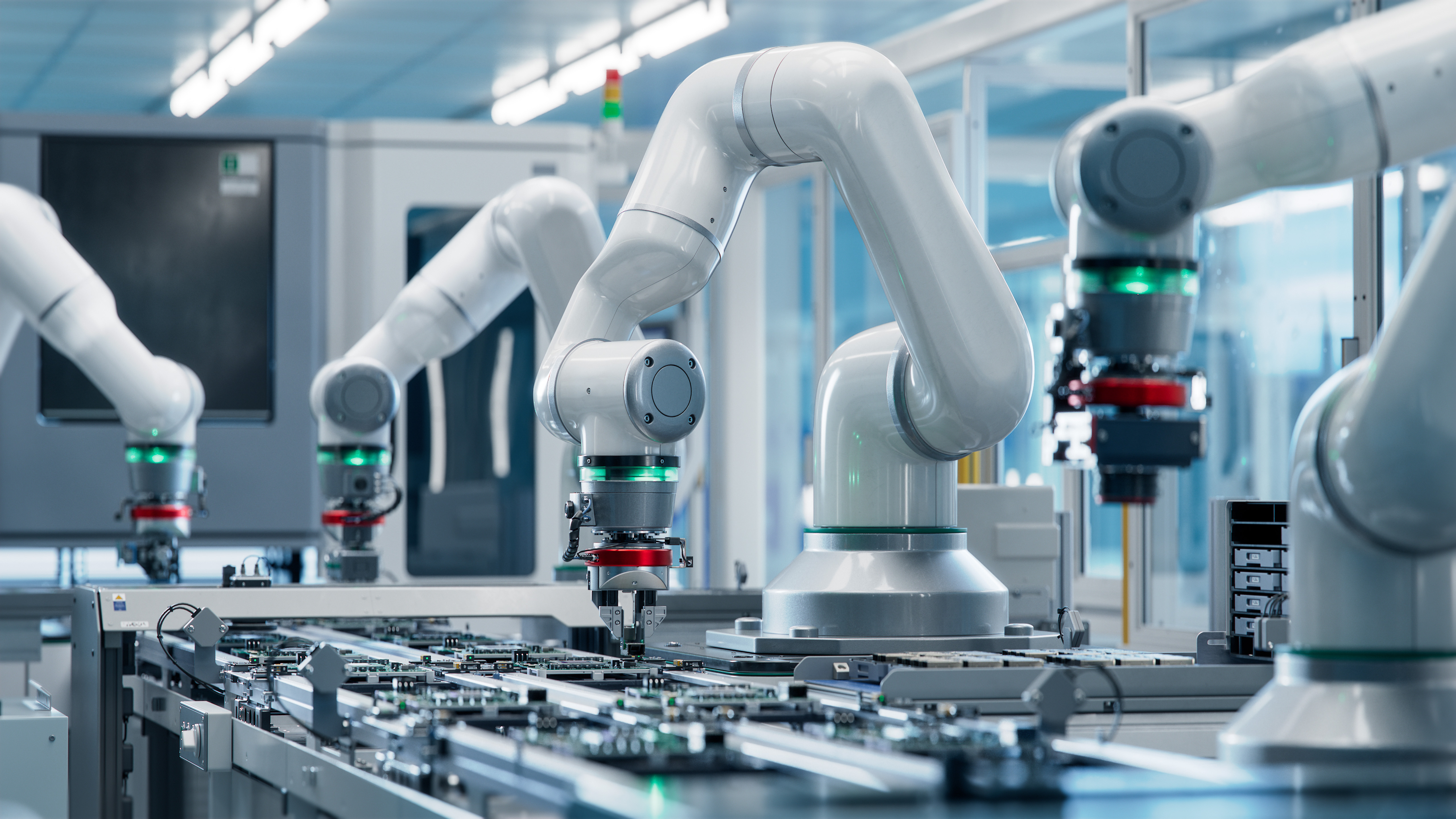
The short answer: IEDA’s eligible technology for the Manufacturing 4.0 grant includes automation equipment, collaborative and advanced robotics, sensors that detect machine wear, predictive maintenance and data analytics software, IIoT server hardware, RFID inventory tracking, industrial wearables, and 3D printers. The best way to choose is to start with a problem on your floor and work back to the technology that solves it.
There are two weeks left to request a CIRAS assessment. November 20 is the last day, and the assessment is required to apply. You don’t need a finished project to fill out the form. You need a real problem and a reasonable idea of what might fix it. This post is built to get you there.
IEDA publishes 14 examples, split across the program’s two grant tracks. The list isn’t exhaustive, but it shows what the program was built to fund: technology that makes a small manufacturer more productive, more connected, or safer.
Manufacturing Innovation Equipment track
Industrial Internet of Things (IIoT) Infrastructure track
One application can draw from both tracks.
A list like this is easy to read and hard to use. Nobody runs a plant by asking which item on a state list they’d like. You start with what’s costing you time or money.
Find the problem first, then look for the technology that answers it. We made the case for starting with the problem in our program overview. This post puts it to work. Here are the problems we hear most from Iowa manufacturers and where each one lands on IEDA’s list.
|
If this is your problem |
Look at these on IEDA’s list |
Watch for |
|
Machines fail without warning |
Sensors that detect wear, predictive maintenance software |
Most predictive maintenance platforms are subscriptions |
|
Production numbers live on a whiteboard |
Data analytics and visualization software, IIoT hardware |
Subscription licensing |
|
Inventory counts never match the system |
RFID tagging software and equipment |
Software licensing model |
|
Repetitive or hard-to-staff tasks |
Collaborative robots, specialized automation |
Lead times |
|
Strain and injury on manual jobs |
Industrial wearables |
Fit with your safety program |
|
Customers calling to ask where their order is |
Sensors that send real-time data to customers or suppliers |
Integration with your current systems |
|
Old servers can’t keep up with your data |
IIoT infrastructure hardware, enhanced server equipment |
Hardware is the most reliable category |
|
Prototypes and fixtures take weeks to arrive |
3D printer |
Fit with your materials and tolerances |
A few of these deserve more than a table row.
Machines that fail without warning are the most common problem we hear about and one of the best fits for this program. Sensors on a spindle, motor, or bearing can catch wear before it becomes a two-hour stoppage. The sensors and the hardware that collects their data fit the list cleanly. The software that analyzes it often doesn’t, for a reason covered below.
Production numbers on a whiteboard are the second most common. If your shift report is a person walking the floor with a clipboard, the problem isn’t effort. It’s that the data never leaves the machine. Getting it off the machine and onto a screen is usually a mix of sensors, network hardware, and visualization software.
Customers asking where their order is sounds like a customer service problem, but it’s a data problem. IEDA specifically names sensor-driven, real-time information sent from the factory floor to customers or suppliers. For a supplier to a larger manufacturer, that visibility can matter as much as anything inside the plant.
Yes, if it’s purchased, not rented. IEDA confirmed that subscription and SaaS licensing isn’t eligible, even when the software category is on the list.
This is the detail that catches the most people. Predictive maintenance, analytics, visualization, and security software are all on IEDA’s list, and in 2026 most of them are sold only as subscriptions. Before you write any software into your plans, ask the vendor one question: is this a one-time license or a subscription? We covered this in more depth for security projects.
Two other confirmed details are worth knowing now:
Put the problem you’re trying to solve and the technology you think might solve it. You’re not committing to a purchase. You’re giving the assessor a starting point.
Something like “We’re considering sensors and predictive maintenance software to reduce unplanned downtime on our CNC line” is plenty. It’s honest, it’s specific, and it tells CIRAS where to look when they visit.
From there, CIRAS schedules an onsite visit of about three hours, and a tailored report follows about two weeks later. CIRAS has confirmed that anyone who requests by November 20 will have the report before applications open on January 4. We walk through the visit, and the numbers worth bringing, in what to expect from a CIRAS assessment.
Requesting sooner rather than at the deadline gives you room. Request this week instead of on November 20 and the whole sequence moves up by two weeks. That’s two more weeks to scope and price the project before the January 29 application deadline, and two fewer weeks of it landing on top of year-end.
Check before you request. The short version: you manufacture goods at an Iowa facility, your NAICS code is in the 31 to 33 range, you’ve been operating at least three years, at least 51% of your gross revenue comes from manufactured goods across your whole legal entity, and you have at least 3 and fewer than 125 full-time employees across all locations. The full list, with IEDA’s clarifications on part-time staff and revenue, is in our program overview.
If you’re close to a line, call IEDA at 515.348.6199 before you request.
We don’t administer this grant, score applications, or perform the CIRAS assessment. We’ll also be straight with you about fit: robotics, wearables, and 3D printers aren’t our work, and an equipment vendor is the right call for those. The sensor, data, network, and server pieces of this list are work we do every day in Iowa plants.
If you’re stuck on the technology question, that’s what the Manufacturing 4.0 Scoping Call is for. Thirty minutes with a Koltiv engineer, and you’ll leave with an answer you can type into the form.

IEDA’s eligible examples include automation equipment, collaborative and advanced robotics, sensors that detect machine wear, predictive maintenance, data analytics, and data visualization software, IIoT server hardware, RFID inventory tracking, industrial wearables, augmented reality equipment, cybersecurity software, and 3D printers. Subscription and SaaS licensing isn’t eligible.
Describe the problem you’re trying to solve and the technology you think might solve it, such as sensors to reduce unplanned downtime. You aren’t committing to a purchase. The answer gives the assessor a starting point for the onsite visit.
Only software you purchase outright. IEDA has confirmed that subscription and SaaS licensing isn’t eligible, even when the software category appears on the eligible list.
Yes. IEDA lists collaborative robots, specialized automation equipment, and advanced and autonomous robotics as eligible examples. Every application is scored individually, so eligibility doesn’t guarantee an award.
November 20, 2026. A completed CIRAS assessment is required to apply for the grant, and applications are due January 29, 2027.
The best Manufacturing 4.0 projects we’ve seen didn’t start with a technology. They started with somebody saying “this keeps happening, and it’s costing us.” If you can say that sentence about something on your floor, you’re closer to a good application than you think. And if you’re not sure which item on IEDA’s list fits your problem, give us thirty minutes. If the answer is a robot vendor and not us, we’ll tell you that too.

6 min read
THE ELIGIBLE TECHNOLOGY LIST SAYS "CYBERSECURITY SOFTWARE." MOST OF WHAT YOU WOULD ACTUALLY BUY IS SOLD BY SUBSCRIPTION, AND SUBSCRIPTIONS DO NOT...

5 min read
IT'S AN ON-SITE VISIT, NOT A FORM AND A PHONE CALL. HERE'S WHAT HAPPENS IN THREE HOURS, WHAT NUMBERS TO BRING, AND WHEN YOUR REPORT ARRIVES. The...

7 min read
IOWA CAN COVER UP TO $75K OF YOUR NEXT TECHNOLOGY INVESTMENT. THE STEP THAT DISQUALIFIES MOST MANUFACTURERS HAPPENS TWO MONTHS BEFORE THE APPLICATION...

5 min read
MOVING BEYOND REACTIVE IT TO SECURE THE HEARTLAND'S INDUSTRIAL SUPPLY CHAIN AND KEEP THE FLOOR MOVING. TL;DRYour shop floor is already connected to...